Renting a Space for a Boudoir Photo Shoot: Private Suites, Studios & Lofts With Soft Window Light
November 2026 · 11 min read
Short answer
For a boudoir photo shoot, rent a styled bedroom or suite in a home, an hourly studio with a daybed, or a loft with tall windows. Pick it for privacy and soft light first. Before you pay, describe the session honestly to the host, ask who will be on the property and whether any device can record indoors, check which way the windows face and whether neighbors can see in, confirm you can control the heat, and make sure there is a private place to change. Book time for hair and makeup, wardrobe changes, breaks and cleanup, not just the shoot.
Boudoir sessions are some of the most personal portraits people book. A client might be planning a gift for a partner, an album before a wedding, or a session that is simply for themselves. Most of them do not want it shot in their own bedroom. The laundry pile, the kids' toys in the hallway, the window that faces the neighbors and the room that never gets warm all get in the way of a client relaxing, and relaxed is what makes the pictures.
Renting a room for a few hours fixes that, and it is also how many photographers without a dedicated studio run boudoir work. The catch is that the qualities that make a space right for this kind of session are not the ones a typical listing advertises. Square footage and a big table don't matter. A lock on the door, the heat, the window direction and who else is in the building do. This guide covers which spaces work, what to ask, and how to plan the booking so nobody feels rushed.
What kind of session is it?
The session shapes the space. One client with one photographer needs a single beautiful room. A photographer running five clients in a day needs a second room for changing and waiting, and a plan so clients don't pass each other in a hallway in a robe.
A solo session for a gift or for yourself
One client, one photographer, often a hair and makeup artist. The client needs to feel safe, warm and unhurried, so a quiet suite or a private studio usually beats a large set.
Bridal boudoir before a wedding
Often booked as an album gift for a partner. Similar needs to a solo session, plus a lingerie-and-veil look, a robe and sometimes a bridesmaid along for moral support. Ask the host about extra guests.
A photographer's boudoir day
One space booked for several clients back to back. You need a separate room or curtained area for changing and waiting, so clients never walk past someone else's session.
A couples or anniversary session
Two clients and usually more wardrobe. A bed plus a second setting, such as a sofa, a window seat or a clawfoot tub, keeps the gallery varied without moving locations.
Spaces that work for boudoir photos
Styled bedroom or suite in a home
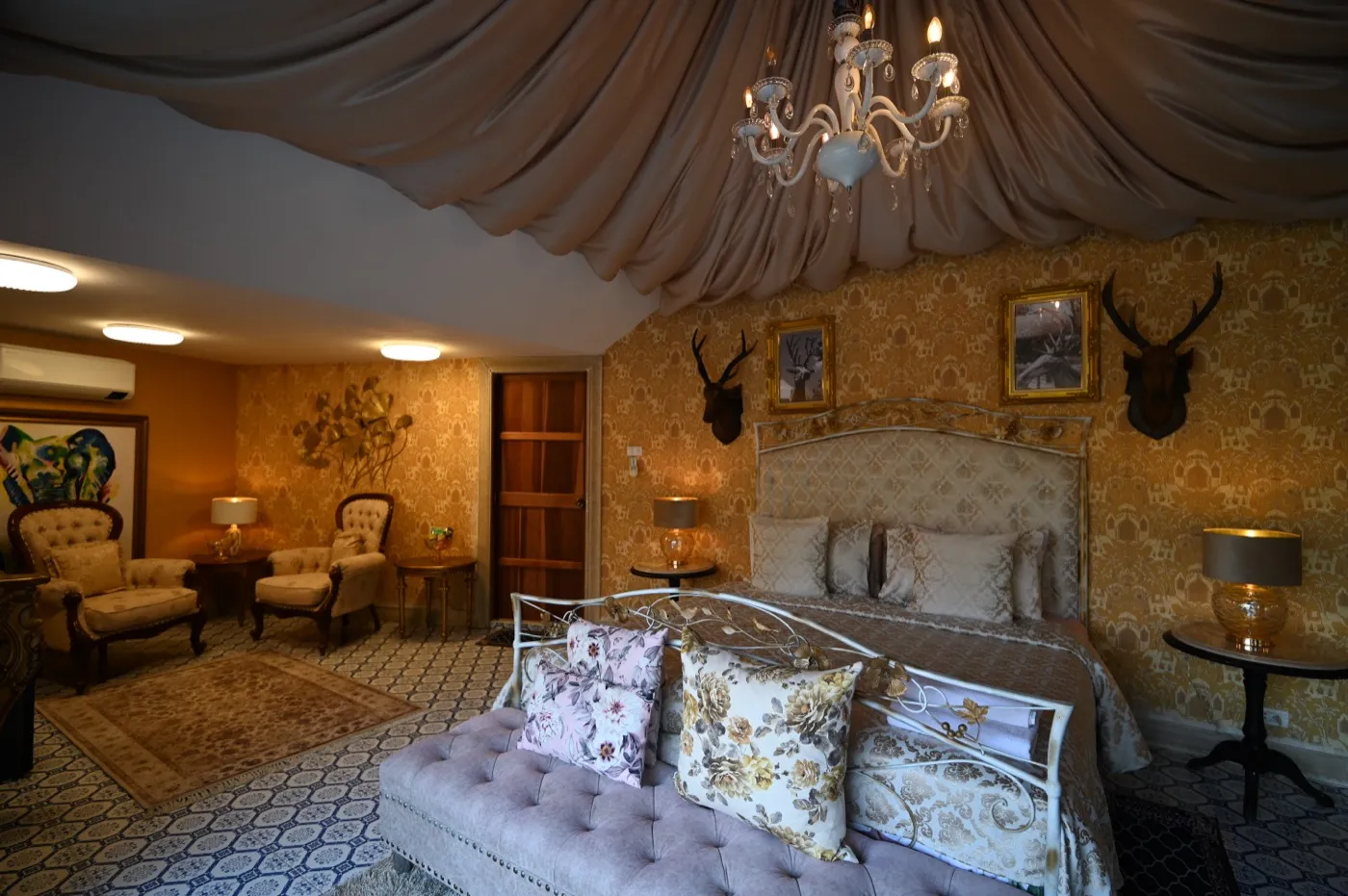
A dressed bed, a headboard with character and a window you can control. The closest thing to the look most clients ask for, and the one where privacy terms matter most.
Photo shoot locationsHourly studio with a daybed or chaise
Lockable door, heat you can turn up, a changing area and room for lights. Less romantic out of the box, so bring linens and a throw.
Studios by the hourLoft with tall windows
Big soft light and texture: brick, wood floors, a sofa or a bed platform. Check sightlines from neighboring buildings before anyone changes.
Loft and warehouse locationsShort-term rental or hotel suite
Easy to find and often beautifully styled, but house rules on photography, visitors and quiet hours apply. Read them before you book, not at the door.
Homes for photo shootsA bed is the obvious centerpiece, but it is rarely the only setting in a good gallery. Look at the listing photos for a second and third spot: a deep window seat, an armchair by the light, a clawfoot tub, a staircase with a railing, a fireplace with a rug in front of it. Three settings in one booking give the client variety without the stress of moving to another location halfway through.
Privacy is the first filter
Every other detail is secondary to the client feeling sure that nobody can see in, walk in or record. Settle these before you book:
- Who is on the property. Some hosts live on site or have family home during a booking. That can be fine for a cooking class and wrong for this. Ask, and ask which rooms are off-limits and whether anyone will need to come in.
- Recording devices. Ask directly whether any device in the home can record video or audio, including doorbell cameras, baby monitors and smart speakers, and where they are. For reference, Airbnb has banned hosts from having security cameras or recording devices that monitor any indoor space since April 30, 2024, and requires exterior cameras to be disclosed in the listing. Other platforms and private hosts set their own rules, so ask the question either way.
- Windows and sightlines. A gorgeous wall of glass is a problem if it faces an office building or a street-level sidewalk. Ask what the windows face, whether there are sheer curtains for diffused light and blackout coverings for changing, and check them yourself when you arrive.
- A door that locks. The shooting room and the changing room should both close, ideally lock.
- A private place to change. A bathroom or second bedroom where the client can change, sit and keep their bag beats a corner behind a coat rack.
Looking for a private, window-lit room?
Send a request with your city and state, how far you are willing to travel, the date and hours, how many people will be there, and whether you want a styled bedroom, a studio or a loft.
Request a SpaceTell the host what the session is
Vague messages cause most of the problems with these bookings. “A small photo shoot” can mean anything, and a host who later learns it was a boudoir session may feel misled even if nothing went wrong. Describe it plainly: an intimate portrait session with a professional photographer, how many people are coming (client, photographer, hair and makeup), the hours, and how the images will be used, for example the client's private album or the photographer's portfolio. Hosts who list for photo shoots generally handle this kind of request routinely, and the ones who would say no are better found before you pay.
If you are booking a short-term rental rather than a space listed for shoots, read the house rules. Airbnb, for example, gives hosts a standard house rule for commercial photography and filming, and its ground rules for guests say that where a listing says no commercial photography, guests should not take part in film or photography intended for commercial use or profit without documented permission from the host. A paid photographer working in the space is exactly the case to raise in the message thread before booking, and to keep the answer there.
Light: plan the booking around the window
Many boudoir photographers favor big, soft window light because it flatters skin and needs little gear. The practical questions for a rented space are which way the main window faces and what time of day you have it. Ask the host, or check the listing photos for shadows and the time they were taken. Direct sun through bare glass is harsh; the same window through a sheer curtain, or at a softer part of the day, is often exactly the look.
- Ask whether the bed or chaise can be moved closer to or angled to the window. Many hosts say yes if it goes back.
- Bring your own white sheer or a large diffuser if the room has heavy drapes only.
- Ask about lamps and dimmers for warm evening frames, and whether there are outlets near the bed for a small light.
- In winter, daylight is short. Schedule the window-lit part of the session first and the lamp-lit looks later.
Heat matters more than people expect
Clients spend much of a boudoir session in lingerie, a robe or a sheet. A room that feels fine to a photographer in a sweater can be cold enough to raise goosebumps and make a client tense up. Ask whether you can control the thermostat in the shooting room and whether a space heater is available or allowed. Warm the room before the client changes, keep a robe and a blanket within reach for every break, and have water and a snack on hand for a long session.
How long to book
Build the booking from the pieces, not from the length of the shoot:
- Setup: styling the bed with your own linens, moving furniture, testing light and warming the room.
- Hair and makeup: if an artist is coming, this often happens on site, and it needs a mirror, a chair and good light.
- The shoot: in sets, with each wardrobe change and a short review of images so the client sees how good it looks.
- Breaks: to warm up, drink water and reset nerves. Clients usually relax as the session goes on.
- Buffers between clients: for a boudoir day, enough of a gap that one client is dressed and gone before the next arrives.
- Reset and cleanup: furniture back where it was, the host's linens remade, makeup checked for on pillows and upholstery.
Protect the host's linens and furniture
Makeup, body shimmer, self-tanner and hair products transfer to pale bedding and upholstery. Bring your own sheets, duvet cover and throws so the host's linens stay out of the frames, and lay a towel under the client between sets. Ask before using candles: many hosts don't allow open flames, and battery candles photograph nearly the same. Flower petals stain light fabric and are easy to leave behind, so bring a bag for them and check under the bed when you pack up.
Questions to ask the host before you book
- Is the session OK with you? (Describe it plainly: an intimate portrait session with a professional photographer, how many people, and that images are for the client's private use or the photographer's portfolio.)
- Will you or anyone else be on the property during the booking, and which rooms are off-limits?
- Are there any indoor cameras, doorbell cameras or smart speakers that can record? Where are they, and can smart devices be unplugged?
- Do the shooting rooms have blackout or sheer window coverings, and does any window face a neighbor, street or shared courtyard?
- Can we control the heat in the shooting room, and is there a space heater we may use?
- Is there a private bathroom or room where the client can change and keep their things?
- May we move furniture, style the bed with our own linens and bring props such as a robe, flowers or candles? (Many hosts don't allow open flames, so ask.)
- Is there a cleaning fee, and what does the deposit cover for makeup on linens or marks on furniture?
- When can we arrive to set up, and how firm is the end time?
Keep the answers in the booking messages. If the host says nobody will be home, that you can move the bed or that a space heater is fine, having it in writing protects you and the deposit.
For photographers booking for clients
If you are renting the space for paying clients, say so to the host, and say how many sessions you plan to run. Many photographers use a written client agreement and a model release that spell out how images can be used, for example whether any frame may appear in a portfolio, and keep the location's rules in mind when they write those terms. Check whether your business insurance covers work at rented locations and whether the host wants a certificate. Send each client the exact address, parking, the door to use and your number, and ask them to arrive at their time rather than early. Our first-time renter's guide covers payments, deposits and cancellations, and our guide to renting a space for a headshot or portrait session covers room depth and light setups if you also shoot clothed portraits the same day.
Common mistakes
- Describing the booking as “a small photo shoot” and leaving the host to guess.
- Not asking who will be on the property or what devices can record.
- Picking a room for its decor and finding the windows face a busy street.
- A cold room in December and a client who can't relax.
- No private place to change, or clients crossing paths on a boudoir day.
- Makeup on the host's white duvet because you didn't bring your own linens.
- Booking only the shoot time and rushing hair, makeup and cleanup.
Before you pay: a short checklist
- Session described honestly and approved by the host in the booking messages.
- Who is on site, off-limits rooms and recording devices confirmed.
- Window direction, sightlines and curtains checked; door locks.
- Heat control or a space heater confirmed; private changing room available.
- Permission to move furniture and use your own linens and props; candle rules known.
- Booking block covers setup, hair and makeup, breaks, client buffers and cleanup.
- Cleaning fee, deposit and cancellation terms read.
Planning a maternity session too? Our guide to renting a space for a maternity photo shoot covers comfort-first rooms and timing for that kind of session.
Find a space for your boudoir session
Tell us your city and state, how far you will travel, the date and hours, how many people are coming and the kind of room you want. Have a styled bedroom, a suite or a loft with great light? Photographers book spaces like yours, and you can list it.
Frequently asked questions
Where can I do a boudoir shoot if my own bedroom won't work?
The usual options are a styled bedroom or suite in a home rented for photo shoots, an hourly studio with a daybed or chaise, a loft with tall windows, or a short-term rental or hotel suite whose house rules allow it. Pick the space for privacy and light first, then look and decor.
Do I need to tell the host it's a boudoir session?
Yes, in plain words. Describe it as an intimate portrait session with a professional photographer, say how many people are coming and how the images will be used. Hosts who rent for photo shoots are used to this, and an honest description up front avoids a canceled booking or a dispute over the deposit later.
Can I do a boudoir shoot in an Airbnb?
Possibly, but read the house rules first. Airbnb lets hosts set a standard rule on commercial photography and filming, and its ground rules say that where a listing says no commercial photography, guests should not shoot for commercial use or profit without documented permission from the host. A paid photographer, a crew or a portfolio shoot is worth raising with the host in the message thread before you book.
How do I make sure a rented space is private enough?
Ask who will be on the property, which rooms are off-limits, whether any device in the home can record video or audio, and whether shooting-room windows face neighbors or a street. Lock the door you are working behind, check the window coverings yourself on arrival, and give the client a private place to change.
What kind of light is best for boudoir photos?
Many boudoir photographers favor large, soft window light, ideally diffused through sheer curtains, because it is flattering and easy to shape by moving the bed or a chair. Ask the host which way the main windows face and plan the booking for the part of the day when that light is soft rather than harsh.
How long should I book a space for a boudoir session?
Longer than the shoot itself. Allow time to set up and style the room, for hair and makeup, for each wardrobe change, for breaks so the client can warm up and relax, and for reset and cleanup at the end. For a photographer's boudoir day, add a buffer between clients so they never overlap.
Sources
- Airbnb Help Center: Ground rules for guests (commercial film and photography)
- Airbnb Help Center: House rules hosts can choose (commercial photography and filming)
- Airbnb Help Center: Security cameras, recording devices and noise monitors (effective April 30, 2024)
- Hero photo: vintage-style bedroom suite, PattayaPatrol, Wikimedia Commons, CC BY-SA 4.0
This guide is general planning information, not legal advice. Follow the host's house rules, the platform's policies and any local rules that apply to your session.