Renting a Space for a Headshot or Portrait Session: Window-Lit Rooms, Studios & Offices by the Hour
November 2026 · 10 min read
Short answer
For one person, rent a room with a large window and a plain wall for an hour or two, timed for bright but indirect light. For a team or a full day of clients, rent an hourly studio or an office with power, a restroom and a place for people to wait. Before you pay, get a wide photo of the room, the window direction, the ceiling height, the outlet locations and the rules on moving furniture or taping a backdrop. Headshots need surprisingly little space, but they need the right space.
A headshot is the most repeated photo most people ever have taken. It goes on LinkedIn, a company website, a speaker bio, a real estate sign, an actor's submission or a book jacket, and it gets judged in a fraction of a second at thumbnail size. The space it is shot in decides most of what makes it good or bad: the quality of the light, what sits behind the subject, and whether the person in the chair is relaxed enough to look like themselves.
This guide is for photographers looking for a place to run headshot sessions without a studio of their own, for HR and marketing teams organizing a company headshot day, and for anyone who wants a portrait taken somewhere better than their own living room. It covers which spaces work, what to measure, how to plan the booking, and what to ask the host. If you are planning a broader shoot with products, outfits or video, our guide to renting a space for a photo or content shoot covers those bookings.
Who rents space for headshots
The same request comes from very different people, and each one needs something slightly different from the room.
- Independent photographers who shoot on location and need a clean, quiet room for a run of clients, often on a weekend or an evening.
- Companies and teams photographing ten, thirty or a hundred employees in one day, where consistency and throughput matter more than a dramatic look.
- Actors and performers who want a few different looks, wardrobe changes and natural light in one session.
- Realtors, coaches, authors and consultants who want a working portrait with some setting behind them: a desk, a bookshelf, a kitchen, a brick wall.
- Families and graduates booking a portrait session indoors once the weather turns cold or the light outside fades early.
Spaces that work for headshots and portraits
Home or apartment with a big window
Soft daylight from one large window is the classic headshot light. Look for a plain wall opposite or beside it.
Homes for photo shootsHourly photo studio
Seamless paper, light stands and blackout control. Best when you need the same look for many people.
Studios by the hourOffice or conference room
Good for a team headshot day: chairs, power, restrooms and a waiting area are already there.
Office spacesLoft with brick or white walls
Environmental portraits with texture behind the subject, plus room to back the camera up.
Warehouse and loft locationsGarden, porch or covered patio
Open shade outdoors gives flattering light. Have an indoor backup for wind, rain and early sunsets.
Backyard rentalsLibrary, den or home office
Bookshelves and desks for authors, coaches, lawyers and anyone who wants a working-portrait feel.
Photo shoot locationsThe main choice is between natural light and controlled light. A window-lit room gives a soft, modern look and costs nothing extra in gear, but the light shifts with the time of day and the weather, so two people photographed an hour apart may not match. A studio, or any room where you can block the windows and use your own lights, gives the same result for the first person and the fiftieth. Teams that want matching headshots across a website usually need controlled light. A single person who wants a natural portrait usually does not.
What to check in the room before you book
Listing photos are styled to show a room at its best, so read them like a photographer. You are looking for five things.
1. The light
Ask which way the main windows face and when direct sun comes in. Direct sun on a face creates hard shadows and squinting; bright, indirect light from a large window is what you want. Rooms with sheer curtains or a covered porch outside often have soft light for more of the day. Plan to switch off overhead and lamp light during the session, because mixed color temperatures give skin an uneven tint that is hard to fix later.
2. Depth, not just floor area
A headshot set is long and narrow. From back to front you need the background, a gap so the subject's shadow falls away from it, the subject on a stool or chair, and enough distance for the photographer to stand back with a portrait-length lens instead of a wide one that distorts faces. Light stands sit to the sides. A room that is long in one direction often beats a bigger square room cluttered with furniture. Ask for the dimensions and a wide photo that shows the full room.
3. Ceiling height and walls
Light stands and a backdrop stand need vertical room, and a low ceiling limits where you can put a light above the subject. Plain, light walls bounce light and can serve as a background on their own. Strongly colored walls throw a color cast onto skin. Textured walls, like brick or wood, are great behind an environmental portrait and distracting behind a tight corporate crop.
4. Power
Strobes recharge on their own batteries, but continuous lights, a laptop for tethered shooting and phone chargers all need outlets. Ask where they are and whether several devices on one circuit have caused problems before. Bring a heavy-duty extension cord and tape it down where people walk.
5. Somewhere to get ready
People look better when they have had a minute in front of a mirror. A restroom, a corner to change shirts and a spot to leave coats and bags make a session run smoother, especially when several people are coming through.
Looking for a headshot space?
Browse window-lit rooms, studios, offices and lofts by the hour, or send a request with your city and state, how far you are willing to travel, your date and hours, and how many people you are photographing.
Request a SpaceKnow where the photo will be used
The end use changes the framing, and the framing changes how much space you need. LinkedIn is the most common destination for a professional headshot. Its help center says a profile photo must be between 400 by 400 and 7,680 by 4,320 pixels, under 8 MB, and a JPG or PNG, and that the background banner is 1,584 by 396 pixels. LinkedIn's own photo tips recommend a crop from the top of the shoulders to just above the head so the face fills about 60% of the frame. That is a tight crop, which means the background barely shows and a small room with a plain wall is plenty.
Website team pages, speaker bios and press kits often want a wider, waist-up frame with some room around the person so a designer can crop to different shapes. That needs a wider background, either a larger backdrop or a wall with nothing on it. Environmental portraits for a real estate agent, a chef or a coach show the setting on purpose, so the room itself becomes part of the picture, and you should choose it the way you would choose a location for any other shoot. Our color palette ideas for photo shoots can help match wardrobe to a room's colors.
Planning a team headshot day
A company headshot day is a scheduling problem as much as a photography one. Work out the booking length from the headcount: pick a slot length per person, multiply by the number of people, then add setup at the start, pack-down at the end and a buffer every hour for late arrivals and retakes. For example, if you plan 10-minute slots for 24 people, that is four hours of sessions before setup, breaks and pack-down. Choose your own slot length based on how many looks each person gets and whether they review photos on the spot.
Get the headcount, a schedule link and a short wardrobe note to everyone. Confirm the room, parking and access with the host.
Arrive early enough to build the set, test light and white balance, and shoot a few test frames on yourself or a colleague.
Run people on a fixed slot length you chose in advance, with a small buffer every hour for late arrivals and retakes.
Show each person a few frames on a laptop or tablet so they leave confident, then note their pick.
Pack down, put furniture back, and leave the room as you found it before the booking ends.
For teams, consistency is the point. Use controlled light, keep the camera height and distance the same for everyone, mark the floor where the chair goes, and shoot against the same background. If employees work in different offices, it is often easier to rent one central room for a day than to set up in several conference rooms with different windows.
Questions to send the host
Send them in one message so the answers live on the booking thread:
- Which direction do the main windows face, and is there direct sun in the room at the hours I want to book?
- Can I see a wide photo of the room showing the walls, the windows and the ceiling, not just the styled corner?
- How high is the ceiling, and is there clear floor space of about [size] for a backdrop stand, two lights and a chair?
- Where are the outlets, and can I run several lights and a laptop at once without tripping a breaker?
- Can I tape or clamp a backdrop, move furniture, or close blinds? Is anything off limits?
- Is there a mirror, a restroom and a private corner where people can change shirts or fix hair?
- Where can I load in stands and cases, and is there an elevator or stairs?
- Where do clients park, and is there a place for the next person to wait while someone else is on set?
- Are there pets, construction or loud neighbors on the booking date that could interrupt the session?
- What are the deposit, cancellation and overtime rules if a session runs long?
If you are a photographer booking on behalf of clients, tell the host how many people will come and go. A steady stream of strangers ringing a doorbell is very different from one photographer and one subject, and good hosts want to know in advance.
Natural light or your own lights?
You can make excellent headshots with only a window. Put the subject a few feet from it, angled slightly toward the light, with a white reflector or foam board on the far side to lift the shadows. Book the hours when the window is bright but not in direct sun, and check the weather: an overcast day gives even, soft light, while a day of passing clouds makes exposure change from frame to frame.
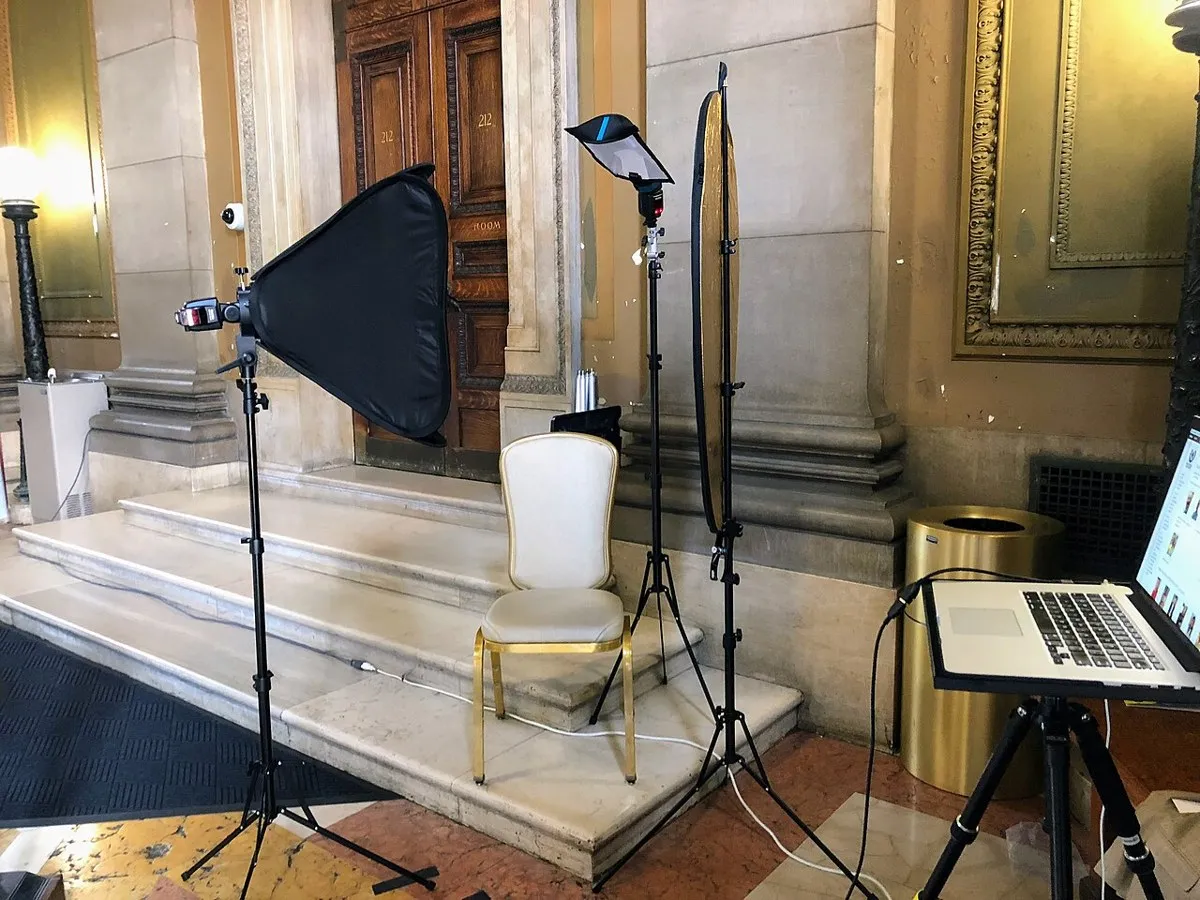
Bringing your own lights frees you from the clock. One large softbox to the side and a reflector, as in the photo at the top of this page, is a standard compact setup that fits in a hallway or a small office. Add a background light or a hair light if the room allows. Either way, a room with darkening blinds gives you the most control, because you can mix in exactly as much daylight as you want.
What it costs
A headshot booking is priced like any hourly rental: the listing's rate times your block, plus any cleaning fee, deposit or extra-guest charge the host sets. Short bookings for one person are the most affordable, while a full team day in a studio or office is a longer block and may have a minimum. Rates vary by city, day of the week and season, so compare real listings for your date. Our guide to how much it costs to rent a space explains how to read a listing's price and what usually gets added.
Common mistakes
- Booking from styled photos alone. Ask for a wide shot of the room and the window direction.
- Picking a room with sun pouring in. Direct sun is the hardest light for a face. Indirect is better.
- Leaving overhead lights on. Mixed color temperature shows up as uneven skin tones.
- Standing the subject against the wall. Leave a gap so shadows drop out of the frame.
- No buffer on a team day. Someone is always late. Build slack into every hour.
- Forgetting the reset. Put furniture back and peel tape before the booking ends.
Before you pay: a short checklist
- You know where the photos will be used and what crop that needs.
- The room's light, window direction, depth and ceiling height fit your setup.
- Outlets, load-in, parking and a restroom are confirmed.
- The host is fine with moving furniture, taping a backdrop and the number of people coming.
- Start time, setup, end time and overtime rules are in writing.
- Deposit, cancellation and damage terms are clear. See our first-time renter's guide for paying safely.
Find a room that photographs well
Can't find the right fit? Send a request with your city and state, how far you are willing to travel, your date and hours, your headcount, and whether you need window light, a studio, or an office setting. Have a bright room that would suit headshots? You can list it too.
Frequently asked questions
What kind of space is best for headshots?+
A room with one large window and a plain wall works for natural-light headshots, and an hourly photo studio works best when you need consistent lighting for many people. For team headshots, an office or conference room is often easiest because chairs, power, restrooms and a waiting area are already there.
How big does a headshot space need to be?+
Smaller than most people expect, but depth matters more than width. You need room for a backdrop or wall, a gap between the subject and the background so shadows fall away, the subject, and enough distance for the photographer to use a portrait-length lens. Add space for one or two light stands to the side. Ask the host for room dimensions and a wide photo before you book.
What size should a LinkedIn profile photo be?+
LinkedIn's help center says profile photos must be between 400 by 400 and 7,680 by 4,320 pixels, under 8 MB, in JPG or PNG. LinkedIn's own photo tips suggest cropping from the top of the shoulders to just above the head so the face fills about 60% of the frame. Any modern camera or phone easily exceeds the minimum size.
Can I shoot headshots with only window light?+
Yes. Large, indirect window light is soft and flattering. Avoid direct sun on the face, turn off overhead lights so colors do not mix, and use a white reflector or foam board on the shadow side. Window light changes through the day, so book the hours when the room has bright but indirect light.
How much does it cost to rent a space for headshots?+
It depends on the city, the type of space and the length of your booking. Hourly listings are priced as the rate times your block, plus any cleaning fee or deposit the host sets. Compare real listings for your date instead of relying on a general number, and see our guide to how pricing works on hourly spaces.
What if I cannot find a space that fits?+
Send a space request with your city and state, how far you are willing to travel, the date and hours, how many people you are photographing, and whether you need window light, a studio, or an office setting. We will look for hosts who match.
Sources
- Photo won't upload to your profile: size and file specifications (LinkedIn Help)
- 10 Tips to Take Professional LinkedIn Profile Pictures (LinkedIn)
- Hero photo: 2018 Pulitzer Prizes photo studio, by Fuzheado (Wikimedia Commons, CC0)
This guide is general planning information. Follow the host's house rules and any requirements set by your client or employer for how photos are taken, stored and used.