Renting a Space for Friendsgiving or Thanksgiving Dinner: Homes, Kitchens & Backyards That Fit the Whole Table
October 2026 · 11 min read
Short answer
If your place can't seat everyone, rent a space by the hour for the meal: a host's home with a big dining room, a kitchen-forward space if you want to cook together, a heated backyard, or an event room for a potluck. Before you book, confirm in writing that you can use the oven, how many guests are allowed, what dishes are included, and what cleanup is expected. Thanksgiving 2026 is Thursday, November 26, so holiday dates and the weekends around it book up first.
Friendsgiving has a space problem built in. The friend with the best cooking skills often has the smallest apartment, the friend with the big table lives forty minutes away, and nobody wants to eat turkey off a paper plate balanced on their knee. Thanksgiving with family has its own version: the year the guest list outgrows the dining room, or the year nobody wants to host. Renting a space for the afternoon solves the table, the oven, and the parking in one booking, and nobody's home gets wrecked.
This guide covers which kinds of spaces work for a holiday meal, how to plan around the kitchen, the food-safety timing that matters more at a long, grazing dinner, what to ask a host, and when to book. If you're planning a December party instead, our guide to renting a space for a holiday party covers that.
Why rent a space for a holiday meal?
- One table for everyone.The point of the meal is sitting together. A space with a long dining table, or room for two tables pushed end to end, beats a kids' table in the hallway.
- More ovens and fridge space. Thanksgiving is an oven-scheduling puzzle. A rented home or kitchen with a second oven, or simply more counter and fridge space, takes most of the stress out of it.
- Neutral ground. Nobody has to deep-clean their apartment before or after, and no single friend carries the hosting load.
- Parking and access. A house with a driveway or easy street parking is a gift when twelve people arrive carrying casserole dishes.
- A setting worth photographing. A dining room with good light, a fireplace, or a patio with string lights makes the group photo better than your living room ever could.
Which kinds of spaces work
A host's home with a big dining room and a real kitchen
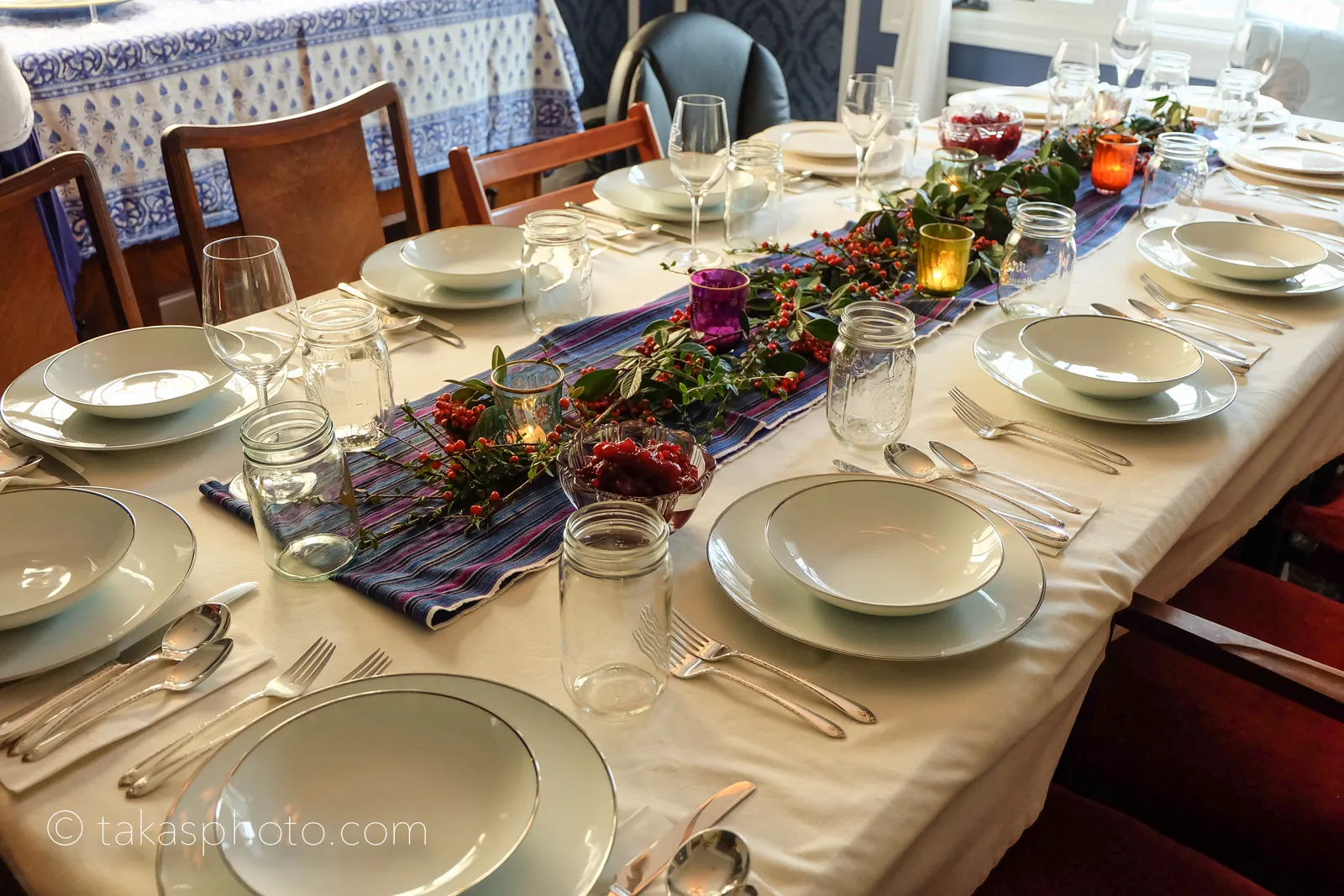
The closest thing to hosting at your own place, minus the cramped table. Look for a dining table that seats your whole group (or room for a second table), a kitchen you are actually allowed to cook in, and enough fridge space for everyone's dishes. Ask which rooms are included and whether the host will be on site.
Private dinner party spacesA kitchen-forward space for a cook-together Friendsgiving
If the point is cooking together, a large home kitchen, a culinary workshop space, or a chef's kitchen rented by the hour beats a dining room with a tiny galley. Count ovens and burners, not just square feet. Two ovens change the whole day.
Cooking and culinary spacesA backyard or patio with heat and cover
In milder climates, or for an afternoon meal, a yard with a covered patio, string lights, and outdoor heaters gives you room for long tables and kids running around. In late November you need a real cold-weather plan: heaters the host allows, a covered area if it rains, and an indoor room to retreat to.
Backyard rentalsA loft, studio, or event room
Open rooms work well for bigger Friendsgivings where people bring dishes rather than cook on site. Check for a prep counter, a fridge, outlets for slow cookers and warming trays, and whether you can bring your own tables and chairs.
Browse event rooms and loftsA private dining room at a restaurant
Someone else cooks and cleans, which some groups decide is worth everything. The trade-off is less control over the menu and timing, food and beverage minimums, and the restaurant's own holiday schedule. Ask early; many restaurants have set Thanksgiving menus or close for the day.
Request a private dining roomPlan around the kitchen first
The single most important question for a holiday booking is what you can do in the kitchen. Listings vary a lot. Some hosts welcome full cooking; some allow reheating only; some don't allow kitchen use at all and expect catered or drop-off food. Decide which kind of meal you're planning, then filter for it.
Cook on site, cook at home, or potluck?
Cooking everything on site needs a full kitchen, a long booking, and a host who is comfortable with a turkey in their oven for hours. Cooking at home and finishing on site is the most common approach: roast the turkey at home, carve it, and bring it in an insulated carrier, then use the rented kitchen for reheating, gravy, and last-minute sides. A potluck needs the least kitchen and the most outlets: slow cookers, warming trays, and an empty fridge shelf for cold dishes.
Make an oven schedule
Write down every dish that needs the oven, its temperature, and how long it takes. If two dishes need different temperatures at the same time and there's only one oven, move one to a slow cooker, the stovetop, or a friend's oven before you arrive. Share the list with the host if you're unsure the kitchen can handle it.
Bring what the host won't have
Hosts usually supply everyday plates and glasses, but rarely enough for twenty, and seldom a roasting pan, meat thermometer, carving knife, gravy boat, or chafing dishes. Ask what's there, then bring the rest. A food thermometer is the one item not to skip.
Find a space with room for the whole table
Browse homes, kitchens, backyards, and event rooms near you, then message hosts about ovens, seating, and cleanup before you book.
Browse SpacesFood safety at a long holiday meal
Holiday dinners stretch out. Food sits on the table through a second helping, dessert, and a long conversation, and dishes travel across town before they're served. That's exactly the situation the USDA's food-safety guidance is built for.
- Cook the turkey to 165°F. USDA says to check with a food thermometer in three places: the thickest part of the breast, the innermost part of the thigh, and the innermost part of the wing. If the bird is stuffed, the center of the stuffing must also reach 165°F.
- Follow the two-hour rule.Perishable food shouldn't sit at room temperature for more than two hours, or one hour if it's above 90°F, which matters at warm-climate backyard dinners.
- Keep hot food hot and cold food cold. USDA recommends holding hot dishes at 140°F or above with warming trays, chafing dishes, or slow cookers, and keeping cold dishes below 40°F, for example in bowls nested over ice. Ask the host where you can plug in warming equipment.
- Pack leftovers fast.Refrigerate within two hours. USDA suggests carving the turkey and storing it in small, shallow containers so it cools quickly, using leftovers within four days, and reheating them to 165°F. Bring containers and a cooler so guests can take food home and the host's fridge isn't left full.
Fire safety in someone else's kitchen
The NFPA calls Thanksgiving the peak day of the year for U.S. home cooking fires, with more than three times the daily average, and says unattended cooking is the leading factor. In a kitchen you don't know, that risk goes up: unfamiliar oven settings, a smoke alarm in an unexpected spot, a crowd in a small space. Assign one person to stay in the kitchen whenever the stovetop is on, keep kids at least three feet from the stove, and ask the host where the fire extinguisher is when you arrive.
Turkey fryers deserve their own conversation. The American Red Cross says never to use one near a house or other structure, to set it on a flat, even surface, and never to fry a turkey that isn't fully thawed. Plenty of hosts ban fryers and open flames outright. Ask before you plan the menu around one.
Questions to send the host before you book
Send these in one message so the answers are in writing on the booking thread:
- Can we use the kitchen, including the oven and stovetop, or is it reheating only? How many ovens are there, and do they run at the same time?
- How much fridge and freezer space can we use, and can we drop food off the night before?
- How many guests are allowed, and how many people does the dining table seat as set up? Can we add a folding table?
- What plates, serving dishes, glassware, and utensils are included? Is there a roasting pan, carving board, or chafing dish we can use?
- Is alcohol allowed? Any rules about who serves it or a cutoff time?
- Are turkey fryers, grills, or open flames allowed anywhere on the property? (Many hosts say no; ask, don't assume.)
- If part of the meal is outside, are heaters allowed and provided, and what's the plan if it rains or is very cold?
- Where do guests park, and are there neighbor or noise rules on a holiday?
- What cleanup is expected: dishes washed, trash and food scraps taken out, recycling sorted? Is there a cleaning fee?
- What is the cancellation and rescheduling policy if travel plans or the weather change?
Our first-time renter's guide to booking safely covers payments, deposits, and keeping communication on the platform. If alcohol is part of the plan, read do you need event insurance to rent a space before you book.
Timing: which day, how far ahead, and how long
Pick the day
Thanksgiving 2026 is Thursday, November 26. Family Thanksgivings land on the day itself. Friendsgivings commonly move to the weekend before (November 21–22) or the Friday and Saturday after, so friends can still travel home. Weeknight Friendsgivings earlier in November are easier to book and often quieter for the host.
Book early
Spaces with a long table and a full kitchen are a small slice of any marketplace, and some hosts block the holiday itself for their own families. Shortlist a few options a few weeks ahead, ask the kitchen and headcount questions above, and confirm the booking once you have answers in writing. Our notes on seasonal demand for space rentals explain which space types fill up around the holidays.
Book a longer block than the meal
A realistic holiday booking covers drop-off and setup, cooking or reheating, the meal itself, dessert and lingering, and cleanup. If you're roasting on site, the oven time alone runs for hours. Running out of booked time while the dishes are still in the sink is the fastest way to end a good day on a sour note.
Budgeting and splitting the cost
Hourly rates vary widely by city, space type, and day, and holiday dates can be priced higher than an ordinary weekend, so check each listing's actual rate and any cleaning fee rather than relying on a general figure. For a Friendsgiving, the simplest split is to divide the booking total evenly and assign dishes by person. Our guide to how much it costs to rent a space for a party walks through the pricing structures hosts use and a simple budget template.
Common mistakes
- Assuming you can cook. "Kitchen" in a listing can mean reheating only. Ask.
- Counting chairs, not table seats. A space that holds twenty people standing may seat ten at its table.
- Forgetting the oven math. One oven, five dishes, three temperatures. Plan it before the day.
- No cold-weather backup. A late-November backyard dinner needs heat and an indoor room.
- Leaving the host a full fridge. Bring containers and send leftovers home with guests.
- Booking only for dinner. Setup and cleanup take real time.
Before you pay: a short checklist
- Kitchen use (oven, stovetop, fridge) is confirmed in writing.
- The table seats your whole group, or extra tables are allowed.
- Guest limit, alcohol rules, and any open-flame or fryer rules are clear.
- You know what dishes and equipment are included and what to bring.
- There's a weather plan for any outdoor part of the day.
- Parking, cleanup expectations, and the cancellation policy are clear.
- Your booking block covers setup, the meal, and cleanup.
Book your Friendsgiving or Thanksgiving space
Browse homes, kitchens, backyards, and event rooms by the hour. Can't find the right fit? Send a request with your city and state, how far your group will travel, your date, headcount, and whether you need a full kitchen, and we'll help you find it.
Frequently asked questions
Can I rent a house just for Thanksgiving dinner?+
Yes. Space rental marketplaces like SpaceSkout list homes, kitchens, backyards, and event rooms by the hour, so you can book a dining room and kitchen for the afternoon and evening without renting overnight. Confirm with the host that cooking is allowed, how many guests the space allows, and what cleanup is expected before you pay.
When is Thanksgiving 2026, and when should I book a space?+
Thanksgiving 2026 falls on Thursday, November 26. Many Friendsgivings happen the weekend before or after. Spaces with big tables and full kitchens are limited, and holiday dates go first, so it's sensible to book a few weeks out and confirm kitchen access and headcount in writing.
How long should I rent a space for Friendsgiving?+
Longer than the meal. Plan time for dropping off food and setting the table, cooking or reheating, a long dinner, dessert, and cleanup. If you're roasting a turkey on site, the oven time alone can run several hours, so either cook at home and transport it or book a block that covers the full roast plus resting and carving.
How long can Thanksgiving food sit out?+
The USDA's two-hour rule says perishable food shouldn't sit at room temperature for more than two hours, or one hour above 90°F. Hot foods should be held at 140°F or above with warming trays, chafing dishes, or slow cookers, and cold dishes kept below 40°F, for example over ice. Refrigerate leftovers within two hours and use them within four days.
Can I deep-fry a turkey at a rented space?+
Only if the host explicitly allows it, and many won't. The American Red Cross says never to use a turkey fryer near a house or other structure, to set it on flat, level ground, and never to fry a turkey that isn't fully thawed. Ask the host before you buy oil, and have a backup plan for roasting.
What if I can't find the right space for my group?+
Send a space request. Include your city and state, how far your group is willing to travel, the date and hours, your headcount, and whether you need a full kitchen or just a place to eat. We'll look for hosts who match.
Sources
- Your Safe Thanksgiving Guide (USDA Food Safety and Inspection Service)
- Keep Food Safety in Mind this Thanksgiving (USDA)
- Thanksgiving safety tips (NFPA)
- Thanksgiving No. 1 Day of the Year for Cooking Fires in U.S. (American Red Cross)
This guide is general planning information. Always follow the host's house rules and local fire and safety codes.