Renting a Space for a Board Game Night or Tabletop Gaming Session: Rooms With Big Tables, Quiet & Time to Finish
November 2026 · 10 min read
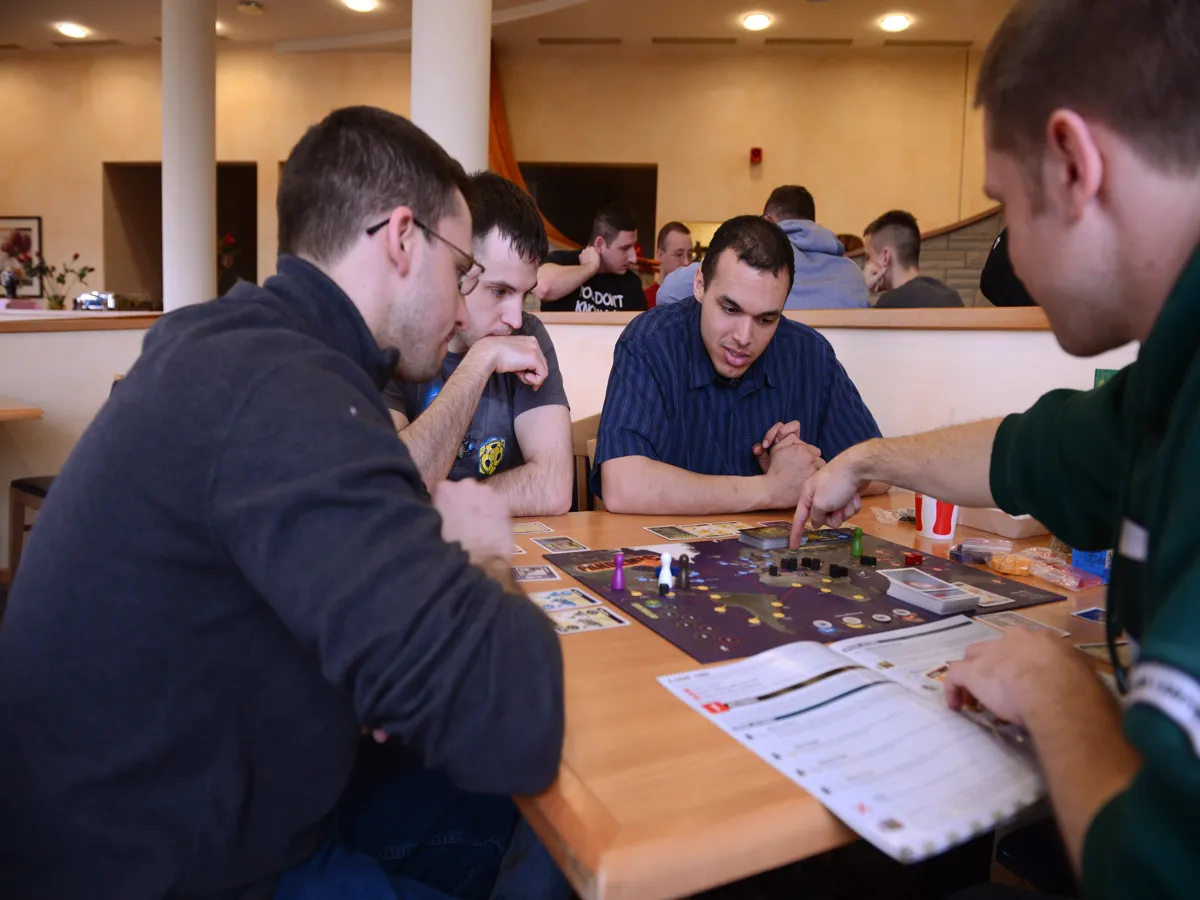
Short answer
For a regular group of four to ten, rent a meeting room or a home with a big dining table, bright overhead light and a door that closes, and book longer than the game says. For a league night or small tournament, rent a loft or event room with several tables. Before you pay, ask for the table size, the chair count, the lighting after dark, the rules on food and drinks, and whether you can stay at the table for the whole block.
Game night outgrows the living room faster than people expect. The group gets bigger, the games get bigger, someone's roommate wants the TV back, or a campaign needs a place where the map can stay on the table for four hours without a cat walking across it. Coffee shops and game stores help, but they get loud, close early, or want the table back. Renting a private room by the hour solves most of that.
This guide is for anyone organizing a board game night, a role-playing campaign, a card game league, a miniatures game or a small tabletop event. It covers which spaces work, how to size the tables, how long to book, and what to ask the host. If your group is really planning a party with games on the side, our guide to renting a space for a game day watch party may be a better fit.
Who rents space for tabletop games
- Regular friend groupswho have outgrown anyone's apartment and want a neutral place every week or every month.
- Role-playing groups running a long campaign, where a consistent room and a quiet table matter more than anything else.
- Clubs and meetups that bring several tables of strangers together and need room to run more than one game at a time.
- Card game organizers running a casual league, a draft night or a small tournament.
- Companies and teams using a game afternoon as a team event or an offsite icebreaker.
- Creators streaming or recording a game session who need good light and a quiet room.
Spaces that work for game night
Conference or meeting room
A long table, good overhead light, power and a door that closes. Great for campaigns and strategy games.
Office and meeting roomsHome with a big dining table
Comfortable for a group of six to ten, with a kitchen nearby for snacks and a couch for breaks.
Homes for private gatheringsBasement or media room
Quiet, often already set up for long evenings, and away from the rest of the house.
Media roomsLoft or event room
Room for several tables at once: a game day, a league night or a small card tournament.
Lofts and open roomsStudio by the hour
Clean, quiet and bookable for exact blocks. Good for streamed or recorded sessions.
Studios by the hourCovered patio or backyard
Lawn games and light card games in good weather. Wind and cards do not mix, so plan an indoor backup.
Backyard rentalsThe main trade-off is between comfort and capacity. A home feels relaxed and usually has a kitchen, which suits a regular group and a long session. A meeting room or event room gives you more tables, better light and fewer distractions, which suits a meetup, a league or anything with strangers. Either can work for a role-playing campaign; the deciding factor is usually whether you need the same room every week.
Table math: how much surface you really need
The number of people is only half of it. Games take up very different amounts of space, and a table that fits six people for dinner may not fit six players and a big strategy game. Plan by game type:
Party and card games
Small footprint. A standard rectangular folding table usually works for a group, but every player needs elbow room for a hand of cards and a drink.
Medium strategy games
The board plus each player's area for cards, tokens and a player board. One table per game is the norm, with a small side table for the box and spare pieces.
Big-box and legacy games
Some of these sprawl well past the board. Ask for the table's actual length and width, and plan on two tables pushed together if you are not sure.
Role-playing games
A table for maps or a grid, room behind the game master's screen, and space for dice, character sheets and laptops. Comfort matters more than size, since sessions run long.
Miniatures and wargames
Often a larger, fixed table area plus terrain. Confirm the table is sturdy and that nobody will need it mid-game.
Card tournaments
Rows of tables, numbered seats, a judge or organizer table near the front and a clear area for pairings and standings.
When in doubt, ask the host for the table's length and width and lay the game out on your own floor at home to see how much room it really takes. A side table for drinks, boxes and spare pieces makes more difference than an extra foot of main table.
What to check in the room before you book
1. Light
Game nights happen in the evening, and listing photos are usually taken in daylight. Small text on cards and dark game boards need bright, even overhead light. A room lit only by lamps can feel cozy and still make a card game miserable. Ask what the room looks like after dark.
2. Noise, in both directions
Tabletop games are louder than people think, especially party games and close finishes. Ask whether there are neighbors, a household or other renters nearby and whether there is an end time or noise limit. Then ask what noise you will hear: a shared wall with a gym or a busy street can make rules explanations hard to follow.
3. Chairs you can sit in for hours
A campaign session or a long strategy game is several hours in the same seat. Dining chairs and office chairs are fine; stools and benches are not. Count the chairs, not just the seats around the table.
4. Food and drink rules
Most groups eat during game night. Ask whether outside food and delivery are allowed, whether there is a kitchen or fridge you can use, and what the rules are on alcohol. Keep drinks off the main table where you can, and pick snacks that do not leave grease on cards.
5. Power and Wi-Fi
Some groups use apps for rules or scoring, laptops for character sheets, a speaker for background music, or a camera for streaming. Ask where the outlets are and whether the Wi-Fi reaches the table.
Looking for a game night space?
Browse meeting rooms, homes, lofts and studios by the hour, or send a request with your city and state, how far your group is willing to travel, your date and hours, and how many players and tables you need.
Request a SpaceHow long to book
The time printed on the box assumes everyone already knows the rules and nobody stops for pizza. Real game nights include people arriving at different times, a rules explanation, setup, breaks, a second game if the first one ends early, and packing up dozens of small pieces. A simple way to plan:
- Arrival and setup: enough time for late arrivals and for the table to be laid out before you start.
- Teaching: new games take a while to explain, especially to players who have never seen them.
- Play: the box time, then add more for new players and for big groups.
- Breaks and food: at least one real break in a long session.
- Pack-up: sorting pieces back into bags takes longer than setup, and the room has to be left as you found it.
If you are not sure, book the longer block. Running out of time in the middle of a game is the most common complaint about rented game nights, and overtime is not always available if the host has another booking.
Recurring sessions and campaigns
A weekly or monthly group is a good fit for a recurring booking. Hosts tend to like predictable renters, and a consistent room means nobody has to learn a new address or parking situation each time. When you set it up, ask about a recurring rate, whether the same table and room are guaranteed, how cancellations work for a single missed week, and whether you can leave a game or a campaign map set up between sessions. Some hosts will allow a small storage box for shared supplies; some will not. Get the answer in writing in the booking messages.
Running a meetup, league or small tournament
When the group includes people who do not know each other, the space has to do more work. Look for a room with several tables, a clear entrance where people can check in, restrooms, and somewhere to post pairings or a schedule. Ask the host about the maximum number of guests the space allows, and stay under it. Give players the exact address, parking and door instructions ahead of time, and name one organizer as the contact for the host. If you are charging entry, check the host's rules on ticketed events before you book. Our guide to renting a space for a networking event or mixer covers check-in and guest flow for groups of strangers.
Questions to send the host
- How big is the table, exactly, and how many chairs are there? Can I add a folding table?
- How bright is the room after dark? Are there overhead lights, or only lamps?
- Can we stay at the table for the whole block, or does anything else happen in the room during the booking?
- Is the space quiet enough for conversation, and is there a noise limit or end time I should plan for?
- Are outside food and delivery allowed? Is alcohol allowed, and are there any rules about it?
- Is there Wi-Fi and enough power for laptops, tablets, a speaker or a camera if we stream the session?
- Can we leave a game set up between sessions, or does everything have to be packed away each time?
- Are there pets in the home that could get on the table or knock over pieces?
- Where do players park, and how do they get in if they arrive late?
- What are the overtime, cancellation and recurring-booking terms?
What it costs
A game night booking is priced like any hourly rental: the listing's rate times your block, plus any cleaning fee, deposit or extra-guest charge the host sets. Splitting the cost across a group usually makes a private room cheaper per person than people expect, especially for a regular group. Rates vary by city, day of the week and season, so compare real listings for your date. Our guide to how much it costs to rent a space explains how to read a listing's price and what usually gets added.
Common mistakes
- Booking by guest count without checking the table size.
- Booking for the box time and running out of time in the middle of a game.
- Choosing a room that looks great in daylight photos and is dim at night.
- Not asking about food, delivery and alcohol until people are already hungry.
- Leaving pieces behind. Do a sweep under the table and chairs before you go.
- For recurring groups, never confirming next week's booking until the night before.
Before you pay: a short checklist
- Table size, chair count and lighting confirmed.
- Food, drink, noise and end-time rules confirmed in the booking messages.
- Booking block includes setup, teaching, breaks and pack-up.
- Parking and entry instructions sent to every player.
- Payment, deposit and cancellation terms read. Our first-time renter's guide covers how to book safely.
Find a room for your next game night
Tell us your city and state, how far your group will travel, the date and hours, and how many players and tables you need. Have a big table and a quiet room? You can list it for game groups too.
Frequently asked questions
What kind of space is best for a board game night?
A room with a large, sturdy table, bright overhead light, comfortable chairs and a door that closes. Meeting rooms and homes with big dining tables are the most common choices. For several tables at once, such as a league night or a small tournament, look at lofts and event rooms.
How long should I book a space for game night?
Longer than the box says. Add time for arriving, teaching the rules, setup, snacks and packing up, and leave a buffer so the last game does not end with the booking. Role-playing sessions and big strategy games often run several hours, so book a long block or ask about overtime terms.
Can I rent a space for a weekly D&D or tabletop group?
Yes. Many hosts like recurring bookings because they are predictable. Ask about a recurring rate, whether the same room and table are available each week, and whether a game can stay set up between sessions.
Can we bring food and drinks to a rented game space?
It depends on the host. Ask before you book whether outside food, delivery and alcohol are allowed, and plan around the table: keep drinks on a side table or in lidded cups, and keep greasy finger food away from cards and boards.
How much does it cost to rent a space for game night?
It depends on the city, the type of space and the length of your booking. Hourly listings are priced as the rate times your block, plus any cleaning fee or deposit the host sets. Compare real listings for your date, and see our guide to how pricing works.
What if I cannot find a space that fits our group?
Send a space request with your city and state, how far your group is willing to travel, the date and hours, how many players and tables you need, and whether you want a quiet room, a home or an event room. We will look for hosts who match.
Sources
This guide is general planning information. Follow the host's house rules, guest limits and any local rules that apply to your event.